
On a practical level, our work looks like this: a health navigator receives a referral from a GP practice, a social worker, a school, or a self-referral through our drop-in. They make contact with the person — by phone, home visit, or at one of our community locations — and carry out a health needs assessment in the person's own language. Together, they identify what services the person needs and what barriers exist to reaching them.
The navigator then works through those barriers systematically: helping register with a GP, booking appointments, attending alongside the person where consent is given, translating and explaining correspondence, and connecting them with other local services as needed. We follow up at key points — after a referral is made, after a first appointment, at four weeks and twelve weeks — to ensure nothing has been lost in translation, literally or otherwise.
Beyond individual casework, we hold a monthly community health drop-in at the Oak Tree Centre in Greenock, and we run an ongoing programme of outreach visits to hostels, temporary accommodation, and community spaces used by newly arrived residents. We train community members as peer health champions — people who are trusted within their own language and cultural communities and can provide informal guidance and warm referrals back to our service. Every intervention we make is recorded and reviewed: we are committed to being not just caring but evidence-based, and to sharing what we learn with the wider sector.
Each programme addresses a distinct dimension of the journey into healthcare — from the first GP registration to understanding a mental health referral to preparing a new mother for childbirth in a new country.
Supporting newly arrived residents to register with a GP practice and access primary care services without delay.
Our navigators work directly with GP practices in Greenock and Port Glasgow to smooth the registration process for new patients who face language or documentation barriers. We attend first appointments where needed, provide pre-appointment briefings in the patient's language, and follow up after consultations to ensure recommendations are understood and acted on. This programme has achieved a 96% GP registration rate among the people we support within four weeks of first contact.
Helping people from communities where mental health is rarely discussed to safely access CAMHS, IAPT, and third-sector talking therapies.
Many of the people we work with carry significant trauma — from displacement, from the asylum process itself, from loss and separation. Mental health services exist in Inverclyde, but they are underused by migrant communities because stigma, language barriers, and unfamiliarity with the referral process all create compounding obstacles. Our mental health navigation strand works to demystify those services, prepare people for what counselling or assessment involves, and support referrals through Inverclyde HSCP and NHSGGC's specialist migrant mental health team.
Ensuring pregnant women and families with young children from migrant backgrounds receive safe, informed maternity and paediatric care.
Pregnancy and early childhood are moments of acute vulnerability for women who are new to the country, unfamiliar with NHS maternity pathways, or unsure whether they are entitled to free care. We provide dedicated navigation for pregnant women from booking appointment through to postnatal support, with female navigators available for women who require them. We also work with health visitors and the family nurse partnership to ensure children from our communities are fully engaged with developmental checks and the childhood vaccination programme.
Building long-term health literacy in arriving communities through workshops, translated resources, and presence at community events.
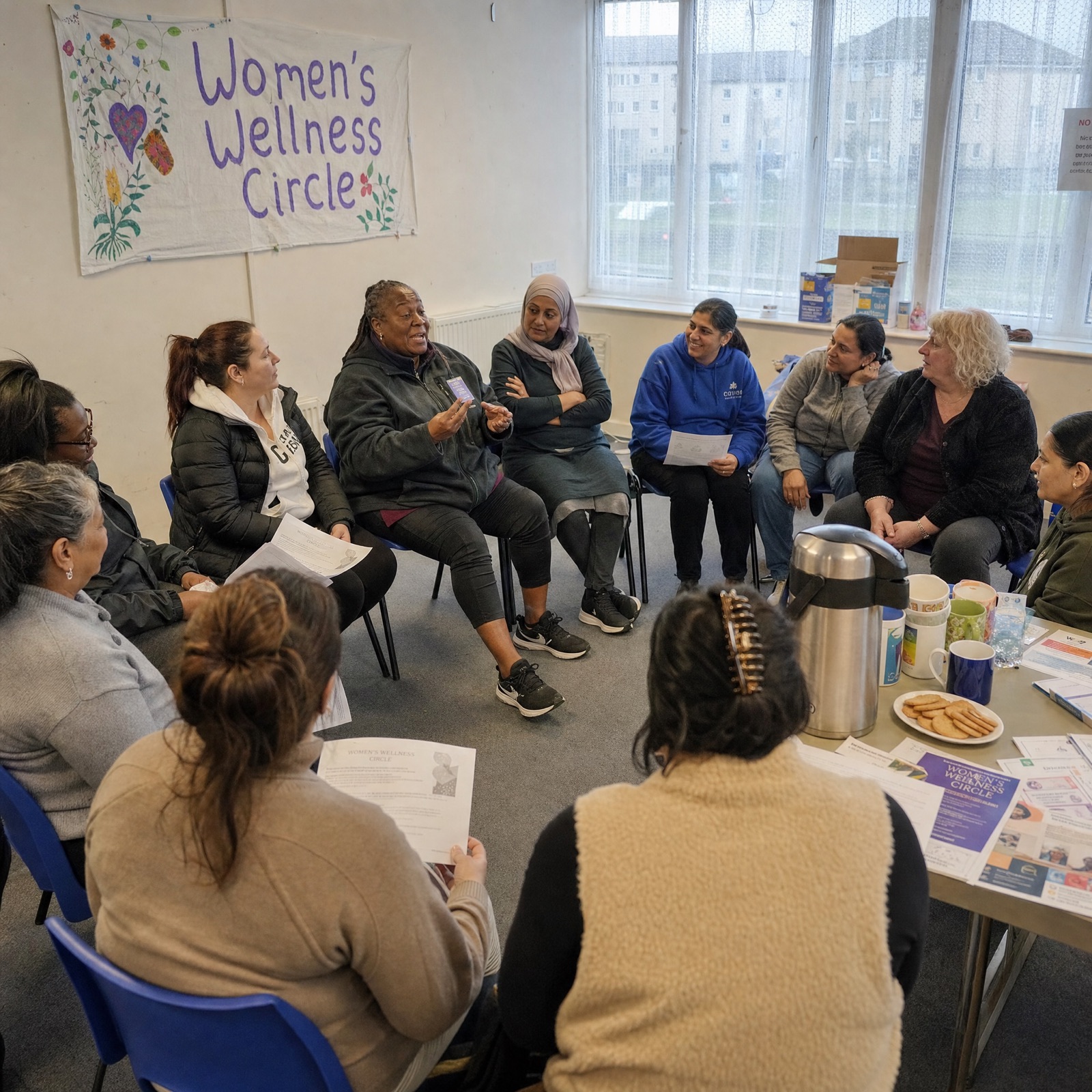
Navigation is most powerful when it builds independence. Our health literacy programme runs group workshops in community spaces across Inverclyde — covering how the NHS works, prescription rights, how to make a complaint, understanding a diagnosis, and self-care for common conditions. All materials are produced in the relevant community languages and reviewed by community members for accuracy and tone. We also run a regular stall at the Greenock migrant welcome drop-in, and attend community festivals and faith gatherings to make sure we are known and trusted before someone faces a health crisis.
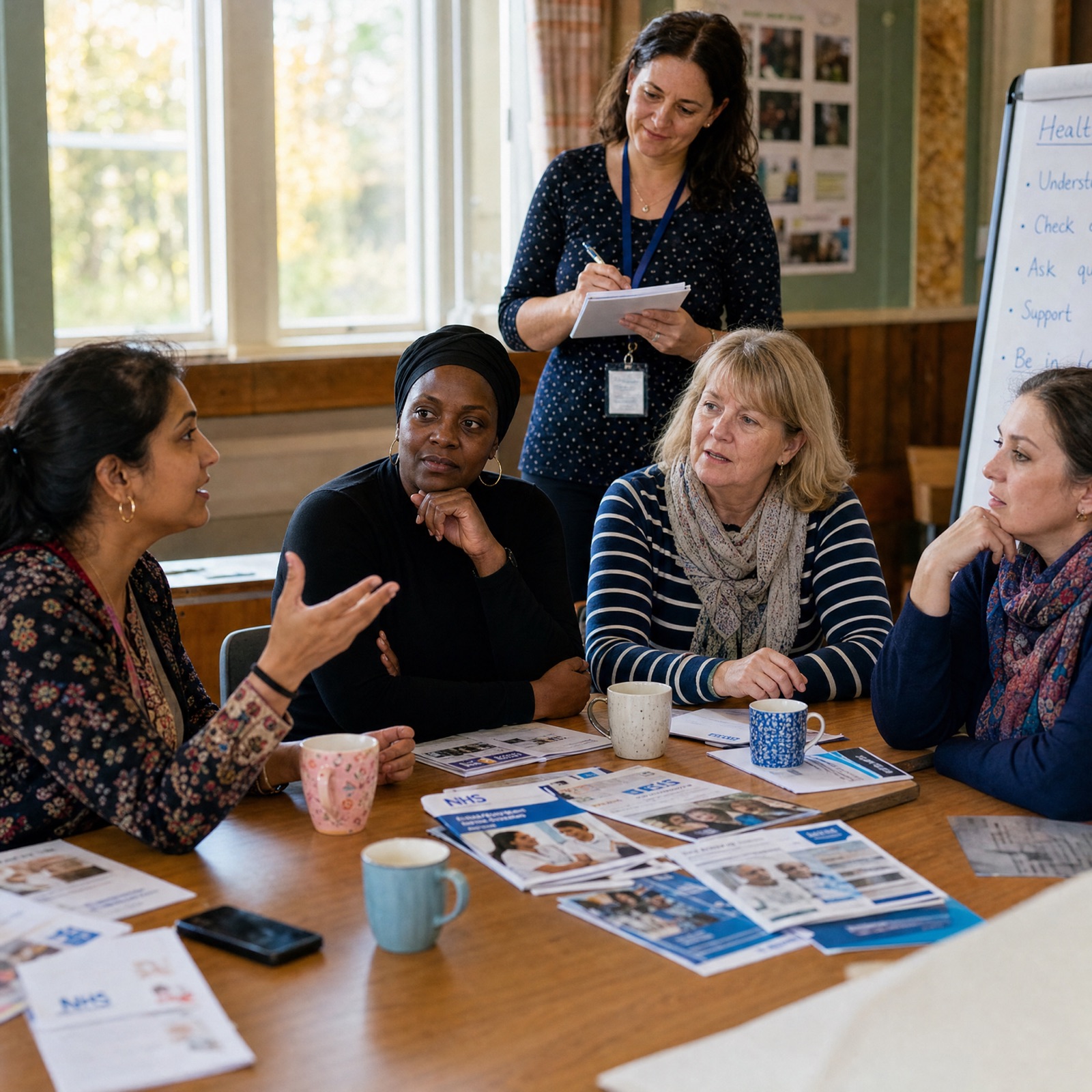 Community centre, Greenock
Health literacy workshop
Community centre, Greenock
Health literacy workshop
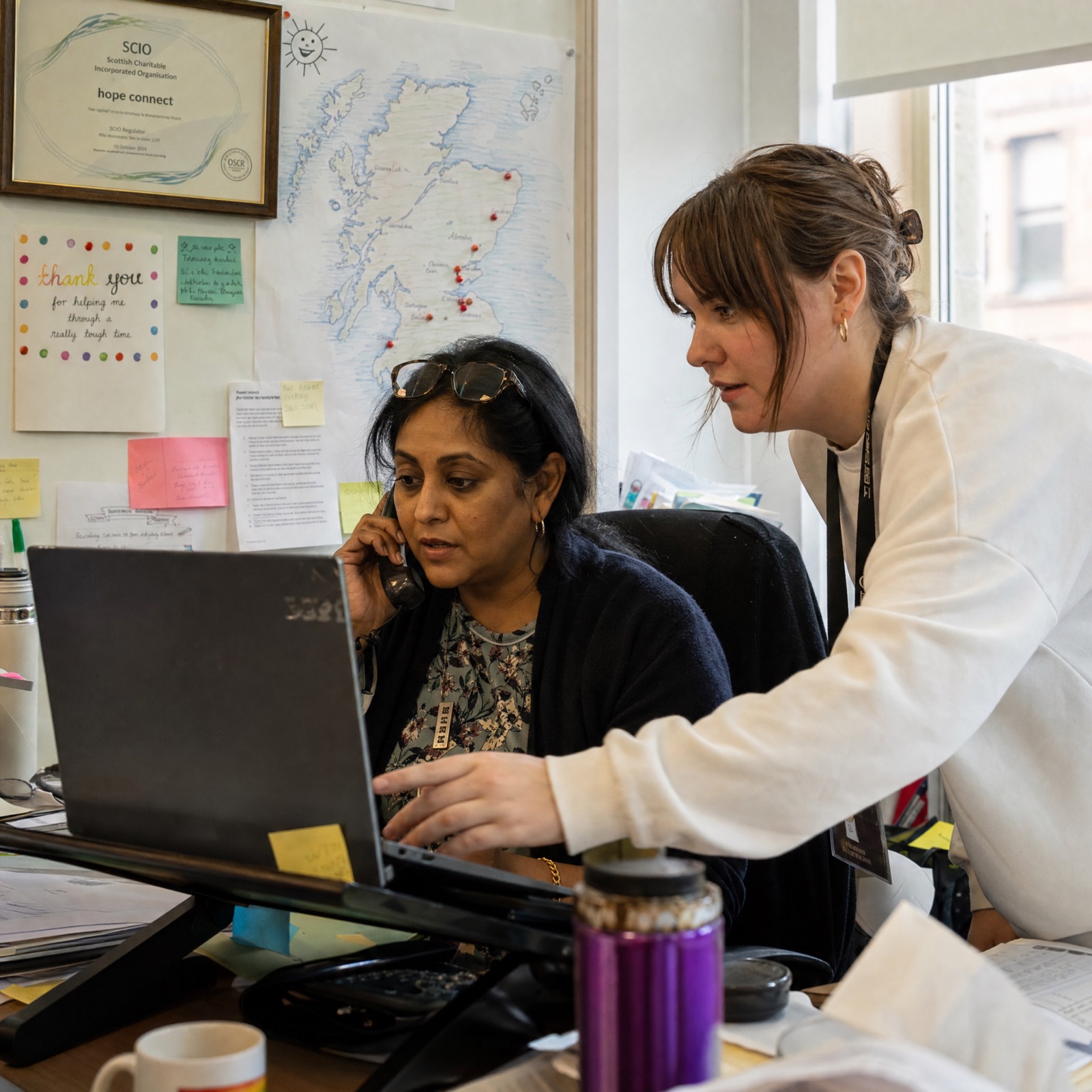 GP surgery navigation
Refer a patient, refer a client, or reach out for yourself or someone you know.
Get in touch